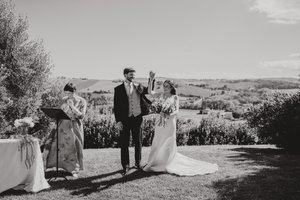
The Hour Before the Ceremony: What a Wedding Celebrant Really Does
There is an hour in every wedding that rarely appears in the photographs.
The guests have not yet taken their seats. The musicians are testing a phrase and then testing it again. Someone is looking for the rings. Someone else is asking whether the bride is on her way, although experience suggests that this is a question best answered with optimism rather than evidence.
And somewhere in the middle of it all, I arrive.
I always reach the venue well before the ceremony begins. Not because I particularly enjoy waiting in formal clothes beneath the Italian summer sun, but because a ceremony starts long before the first words are spoken.
It begins with the space.
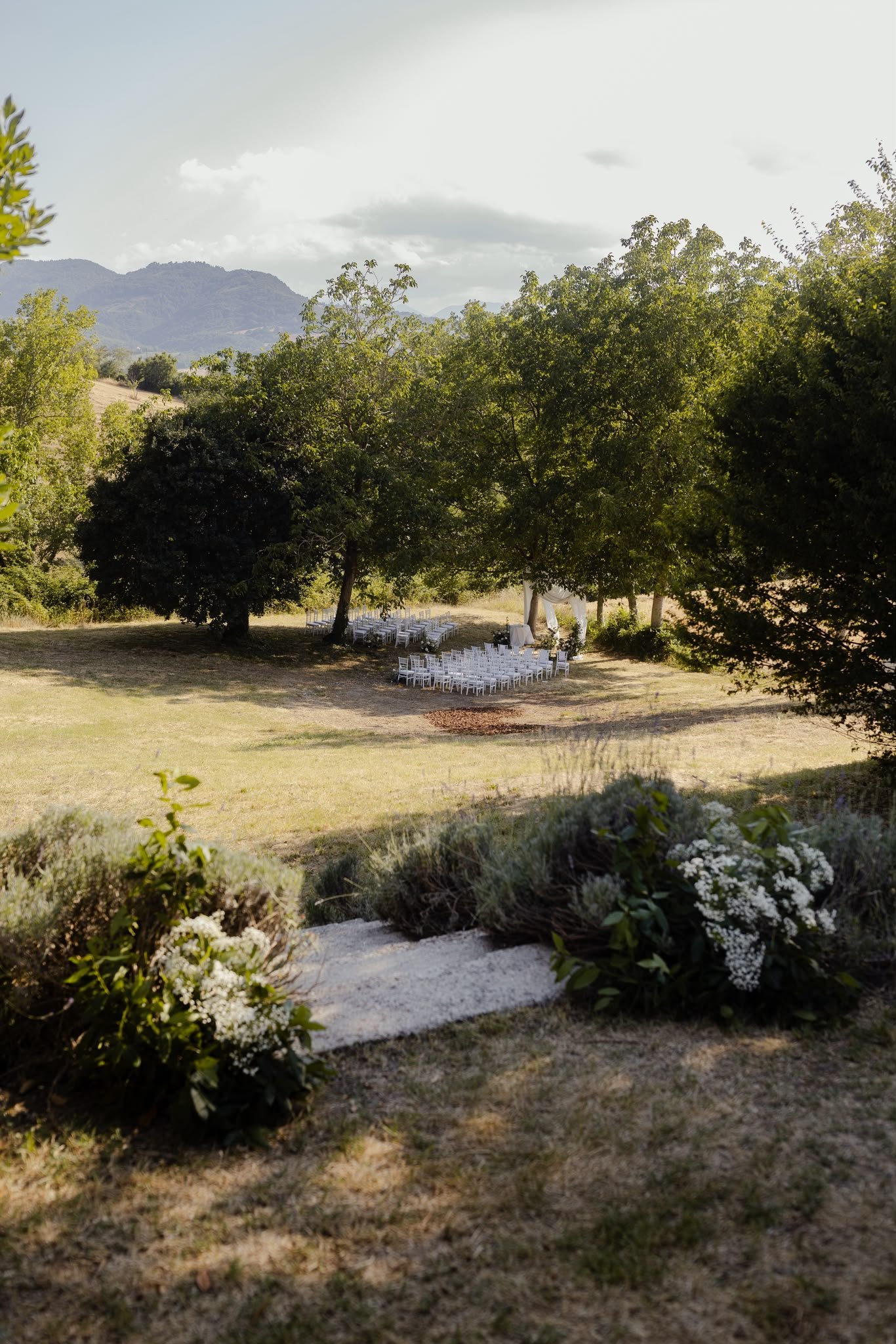
Reading the Room Before There Is a Room
A wedding setting may look perfect in a photograph and still require a little thought before it can hold a ceremony.
Can every guest see the couple? Will the readers know where to stand? Is the microphone at the correct height? Is the music audible without becoming the principal character? Are the rings where they should be—and does the person carrying them know precisely when their moment will arrive?
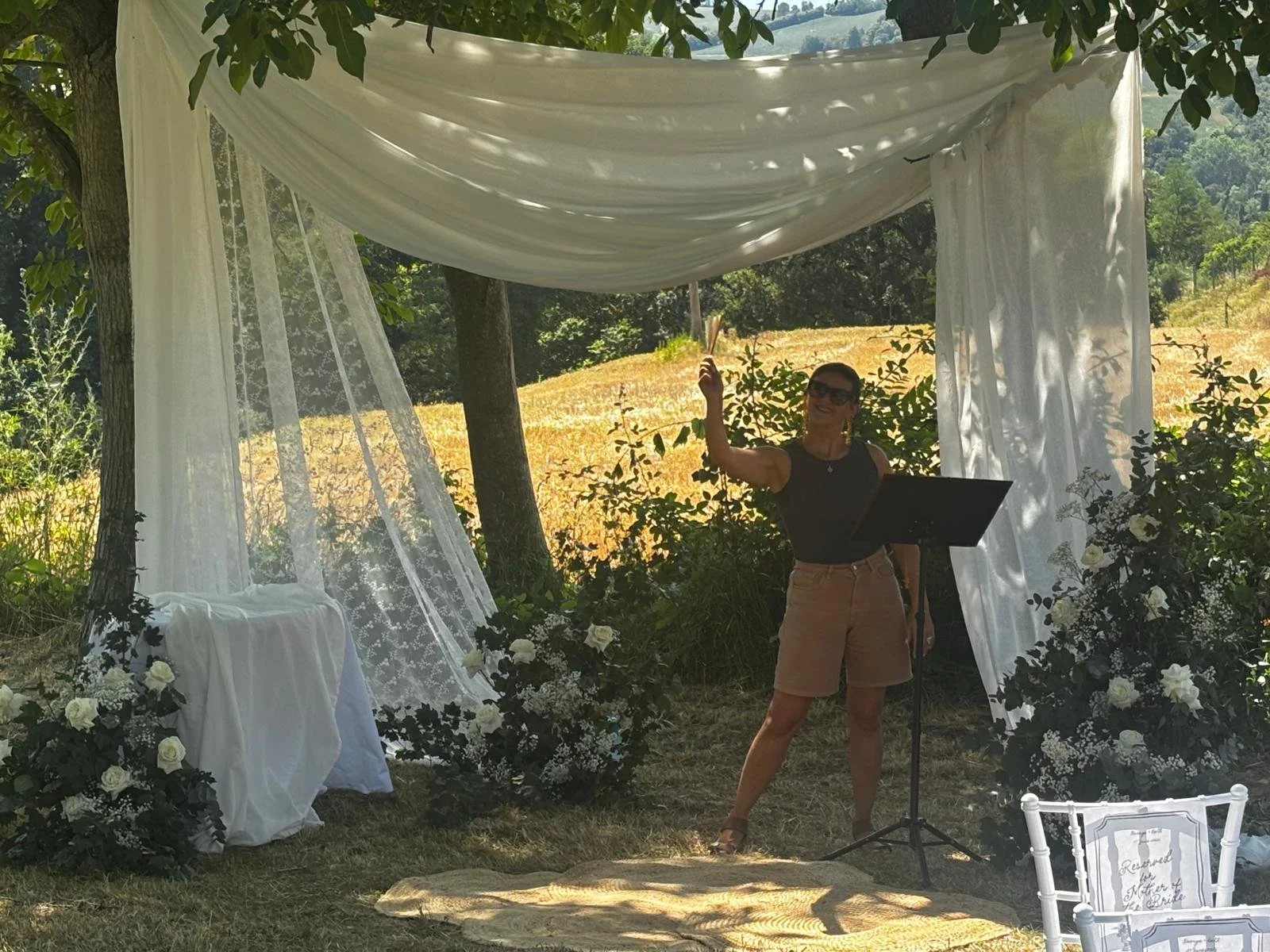
These are practical questions, but they are not merely logistics. They influence how people feel.
A chair placed at the wrong angle can leave a grandmother unable to see. A reader who has not been shown where to stand may approach the microphone already flustered. A couple facing away from everyone they love can feel as if they are performing rather than being surrounded.
Part of my work as a destination wedding celebrant in Italy is to notice these things before they become noticeable.
The Emotional Weather
Then there is another kind of preparation: reading the emotional weather.
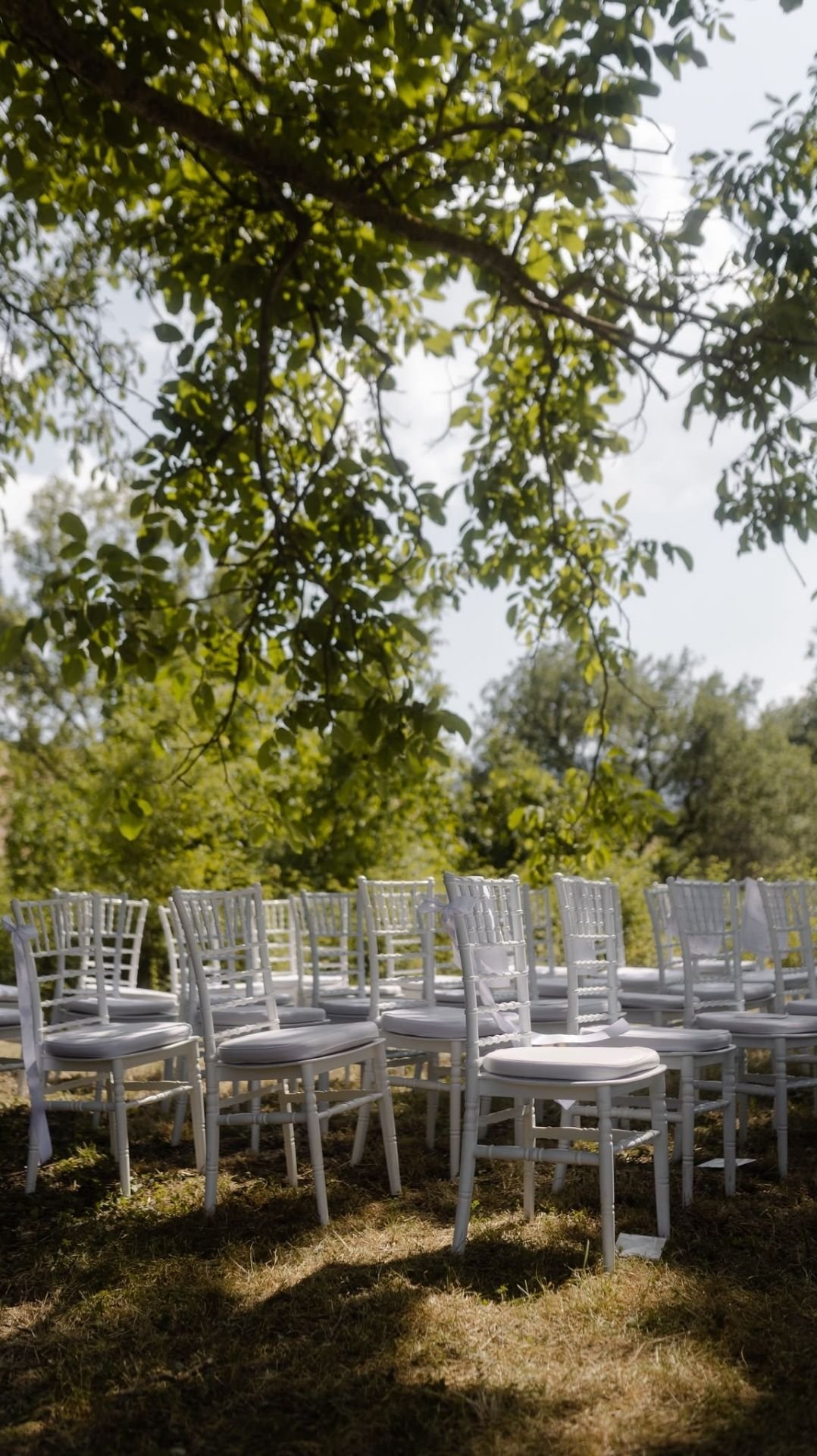
Every wedding has its own atmosphere. Sometimes it is light and expansive. Sometimes the air is full of excitement and nerves. Occasionally, everyone appears remarkably calm, which usually means that one highly efficient person has absorbed the anxiety on behalf of the entire gathering.
I speak to the musicians, greet the wedding team and find the people who will be reading during the ceremony. I reassure those who suddenly fear they will forget how to pronounce perfectly ordinary words. I remind them to breathe, slow down and look at the couple.
I also take a moment for myself.
I have written and rehearsed the ceremony, but now I must inhabit it. I need to leave the journey behind, become still and prepare to hold the attention of the room.
A celebrant cannot ask everyone else to be present if she has not first arrived emotionally herself.
The Ceremony Is Not Just a Script
People sometimes imagine that the work of a celebrant consists of standing in front of a couple and reading a beautiful text.
The text matters enormously. I have spent hours listening, writing, revising and rehearsing it. But words do not exist separately from the moment in which they are spoken.
A ceremony is alive.
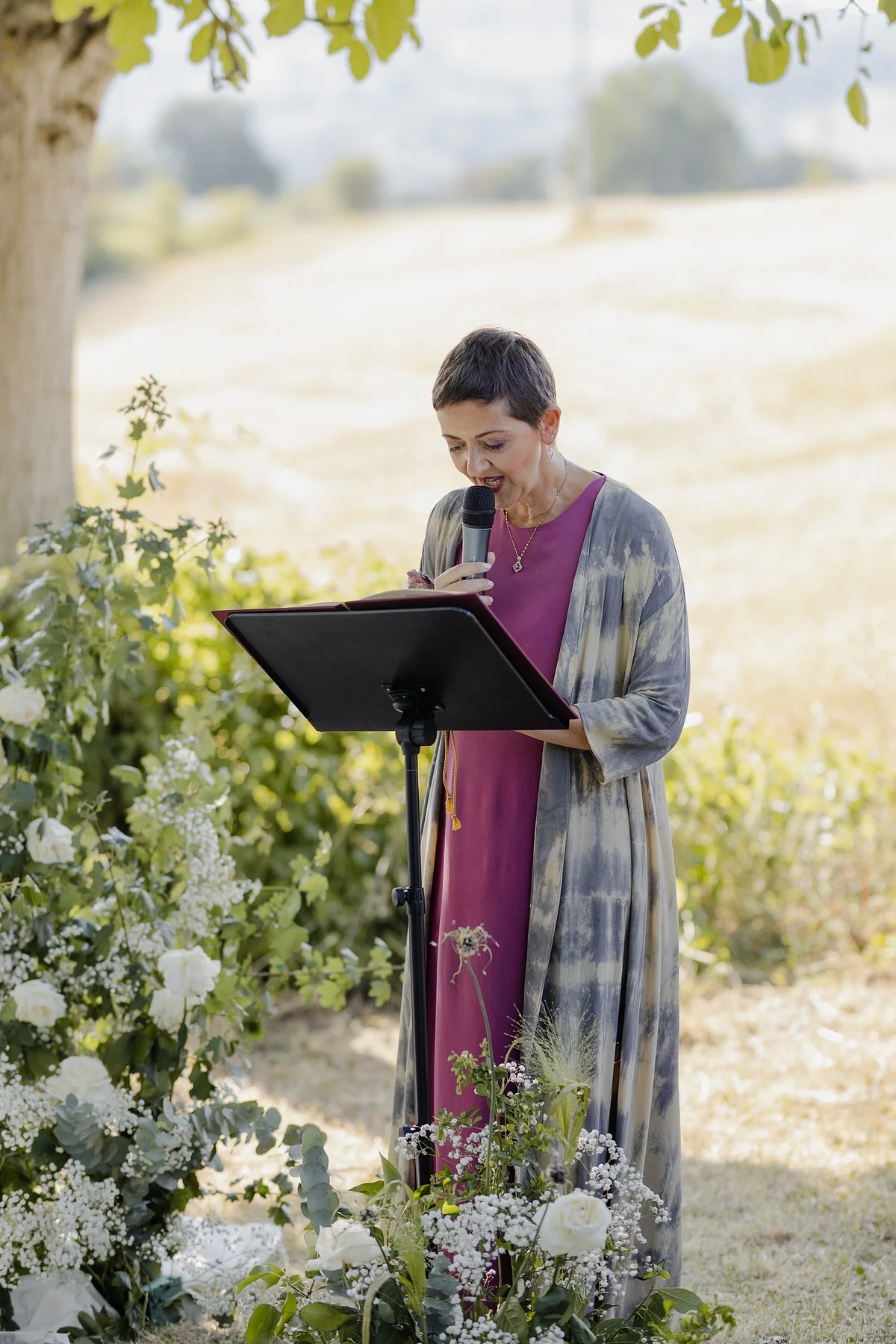
A page cannot tell me that one partner needs an extra second to compose themselves before beginning their vows. It cannot predict the unexpected laugh that releases everyone’s tension or the silence that deserves to remain unbroken. It cannot account for a gust of wind, a missing reading or a ring that has developed an independent travel itinerary.
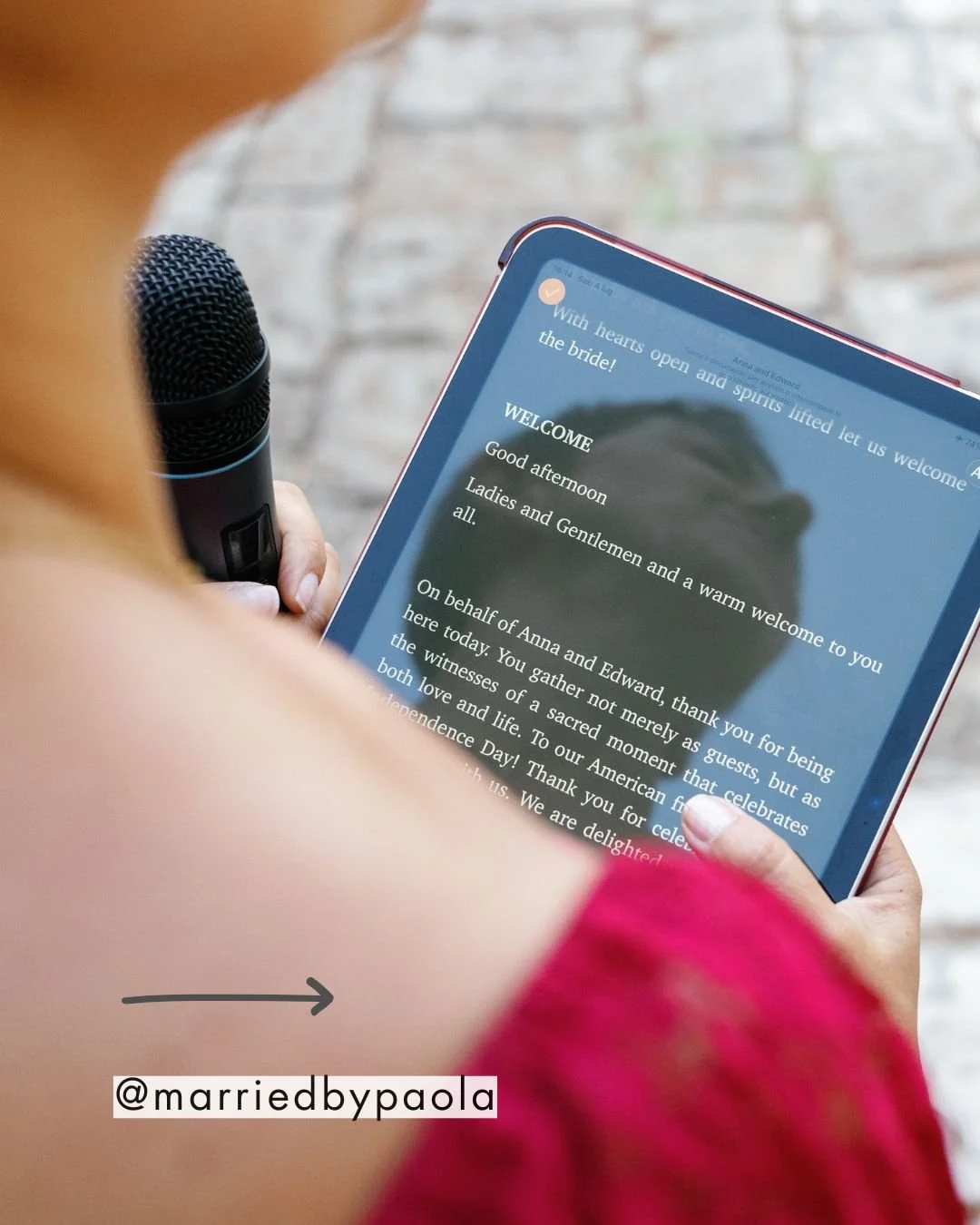
This is where preparation becomes presence.
My responsibility is not simply to continue reading. It is to understand the rhythm of the moment: when to pause, when to help, when to smile and when to allow emotion to occupy the space without rushing to fill it.
Small Details, Deep Meaning
Many of the things I check during that hour will never be known to the couple.
That is as it should be.
They do not need to know that a reader was nervous, that the music cue required a final conversation or that the wind had strong opinions about my printed pages. They should be free to enter the ceremony without carrying its mechanics.
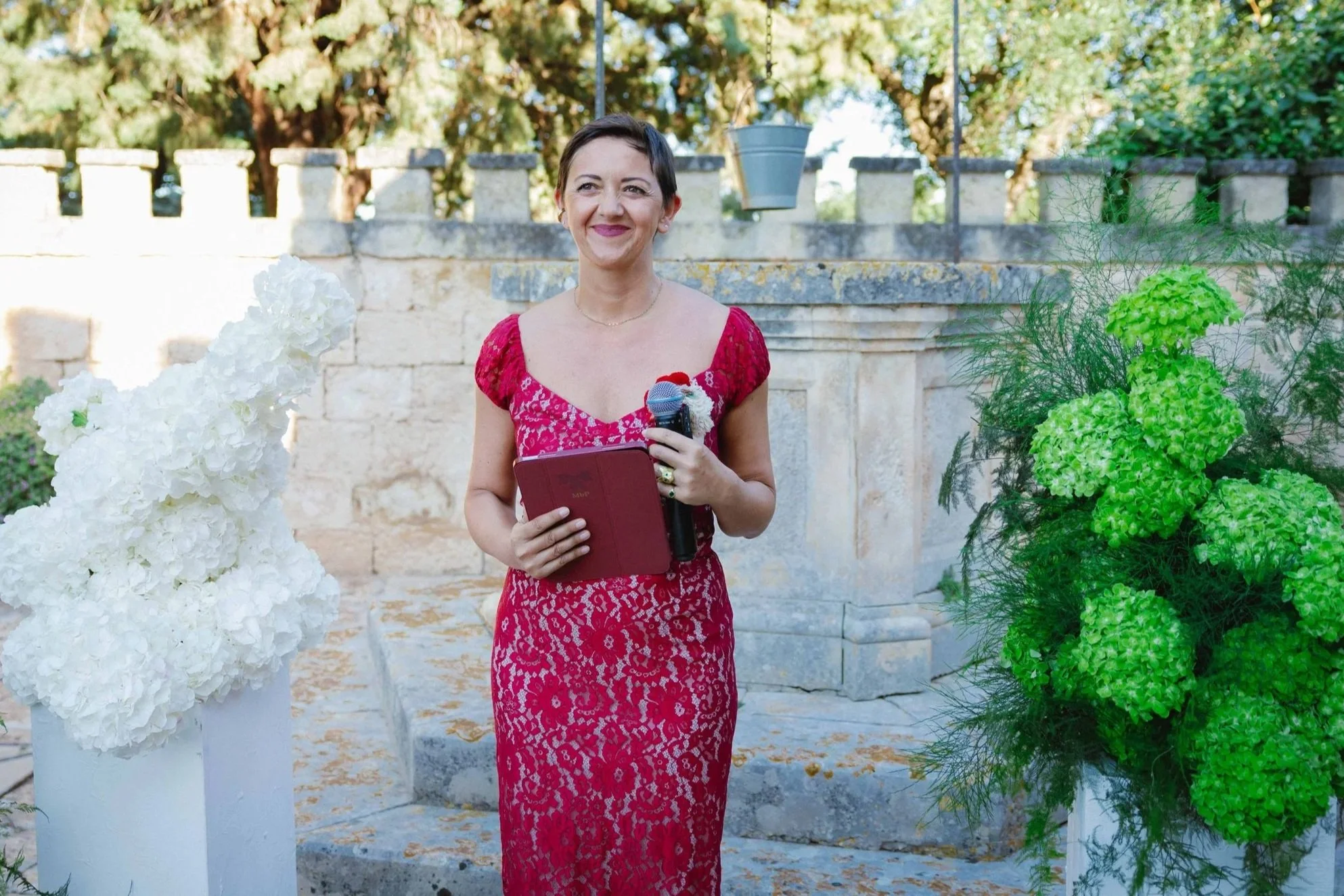
Good ceremony work is often invisible. It creates the feeling that everything unfolded naturally, even when that sense of ease was carefully prepared.
For international couples marrying in Italy, this quiet work becomes especially important. Different languages, family traditions and cultural expectations are meeting in the same place. My role is to help everyone feel included and to ensure that the ceremony belongs not only to its beautiful Italian setting, but unmistakably to the two people at its heart.
The Moment Everything Changes
And then the guests take their seats.
The conversations soften. The music begins properly this time. Someone turns towards the entrance, and everyone else follows.
The space that, only an hour earlier, was made of chairs, cables, flowers and unanswered questions becomes something else. It becomes a threshold.
I look at the couple and see that mixture I never tire of witnessing: happiness, vulnerability, disbelief and the sudden realisation that the long-awaited moment is no longer approaching.
It is here.
This is why I arrive early.
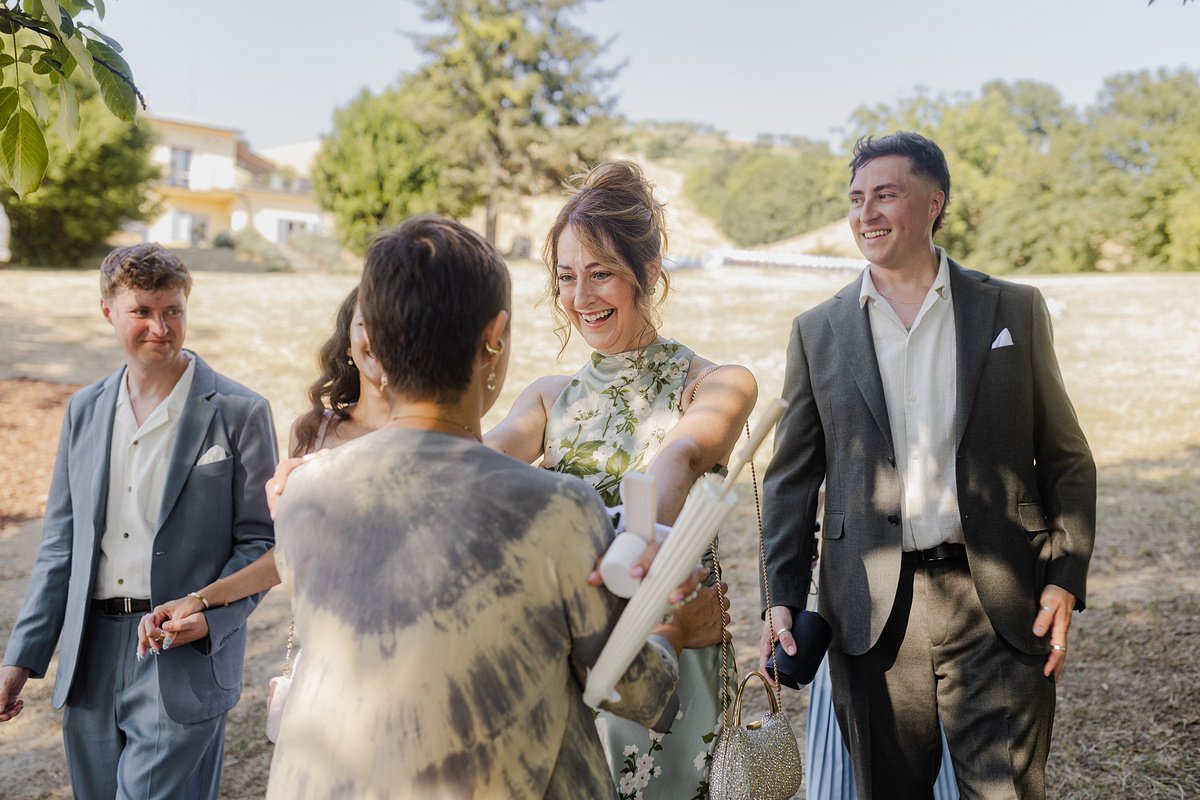
Not simply to check a microphone or speak to the musicians, but to prepare a space in which two people can feel safe enough to be fully present. A space where their story can be heard, their promises can carry meaning and the people they love can recognise them in every word.
The ceremony may last twenty minutes.
But those twenty minutes deserve all the time, thought and care that came before them.
If you are planning a destination wedding, elopement or vow renewal in Italy and would like a ceremony created with this same attention, I would love to hear your story.
Paola
Married by Paola — The Celebrant with an Italian Heart